"3D Printing & Functional Surfaces": A new degree programme in response to the needs of industry
27 April 2026
Prof Ingo Reinhold and Katharina Roeber on studying for the industry of tomorrow
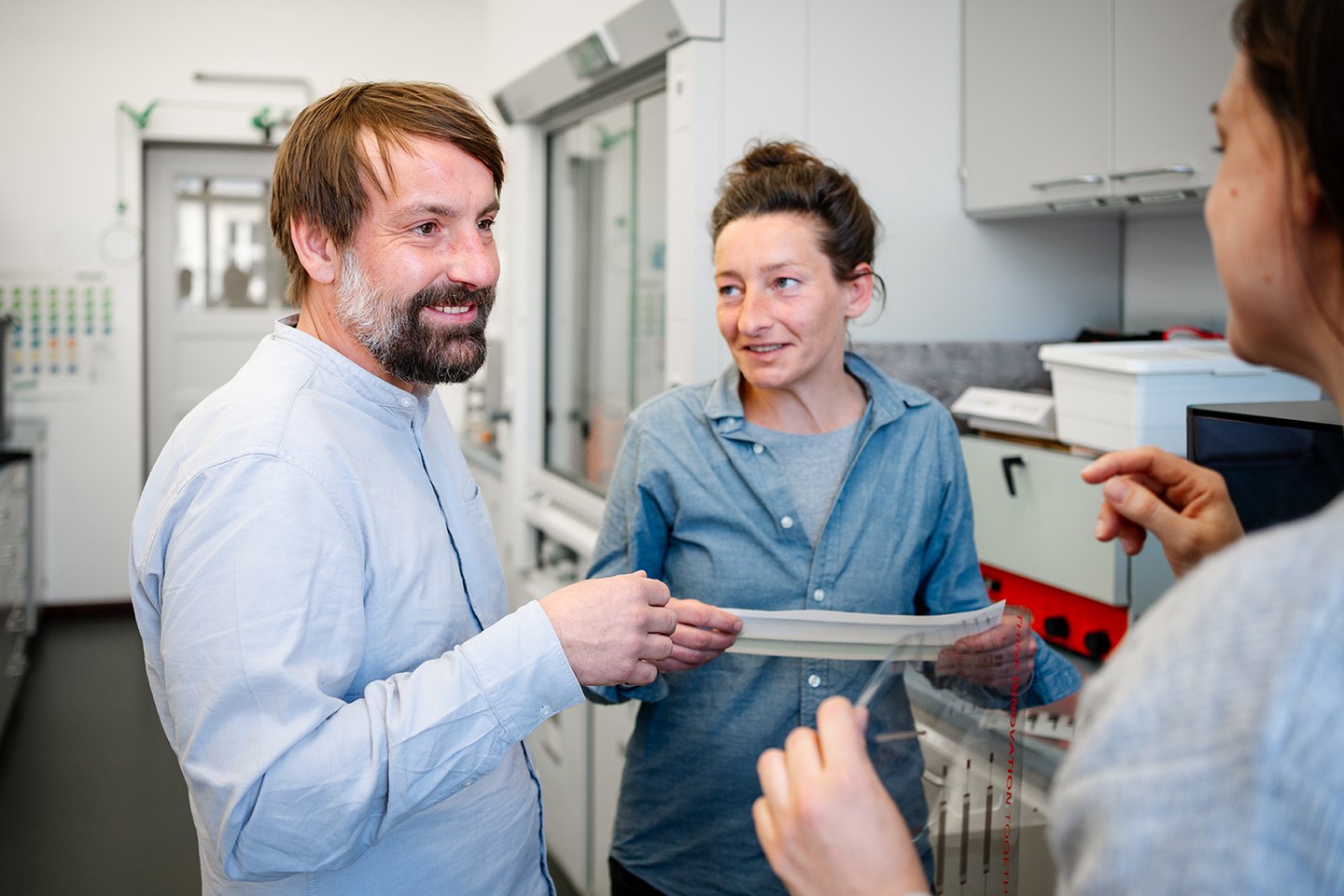
Prof Ingo Reinhold (abbreviated to IR) explains together with print engineer and coordinator of the cooperation project with the flexographic printing association DFTA Katharina Roeber (abbreviated to KR) why printing technologies are more relevant today than ever before. They provide an insight into what is really behind 3D printing and how the new degree programme "3D Printing & Functional Surfaces" programme trains specialists for the future. A wide range of future prospects for the industry of tomorrow will also be highlighted.
3D printing is on everyone's lips: where does the relevance come from and what makes the process so special?
IR: "3D printing technology is changing a fundamental principle in industrial manufacturing: instead of producing workpieces by removing excess material (e.g. by drilling, milling or etching), the object is built up layer by layer in the required shape. Additive manufacturing is used and material is only used where it is needed: minimum use of resources - maximum functionality. This is a real paradigm shift in manufacturing - and that's where the magic lies for me.
When we print objects, the creative scope for product design also changes enormously: not only can customised individual pieces be produced quickly on site, but structures in the micro and nano range and various functions can be integrated in a targeted manner. It is almost impossible to predict what is then possible. Anyone who masters this manufacturing expertise can actively shape the world of tomorrow."
Prof Reinhold, please briefly explain why a new degree course in 3D printing is needed:
IR: "Our degree programme directly addresses the existing demand for specialists in the industry. The transformation towards additive manufacturing concepts, in which printing is an elementary process component, requires experts who understand these technologies, can develop them further and design them for new applications. On the one hand, this requires knowledge of methods, materials, processes and interfaces. On the other hand, a completely different way of thinking is required when designing components and objects to be printed. We have taken all of these aspects and changes into account when designing the degree programme in order to be able to offer young people an industry-relevant and future-oriented course of study that prepares them for the wide range of applications of printing technology."
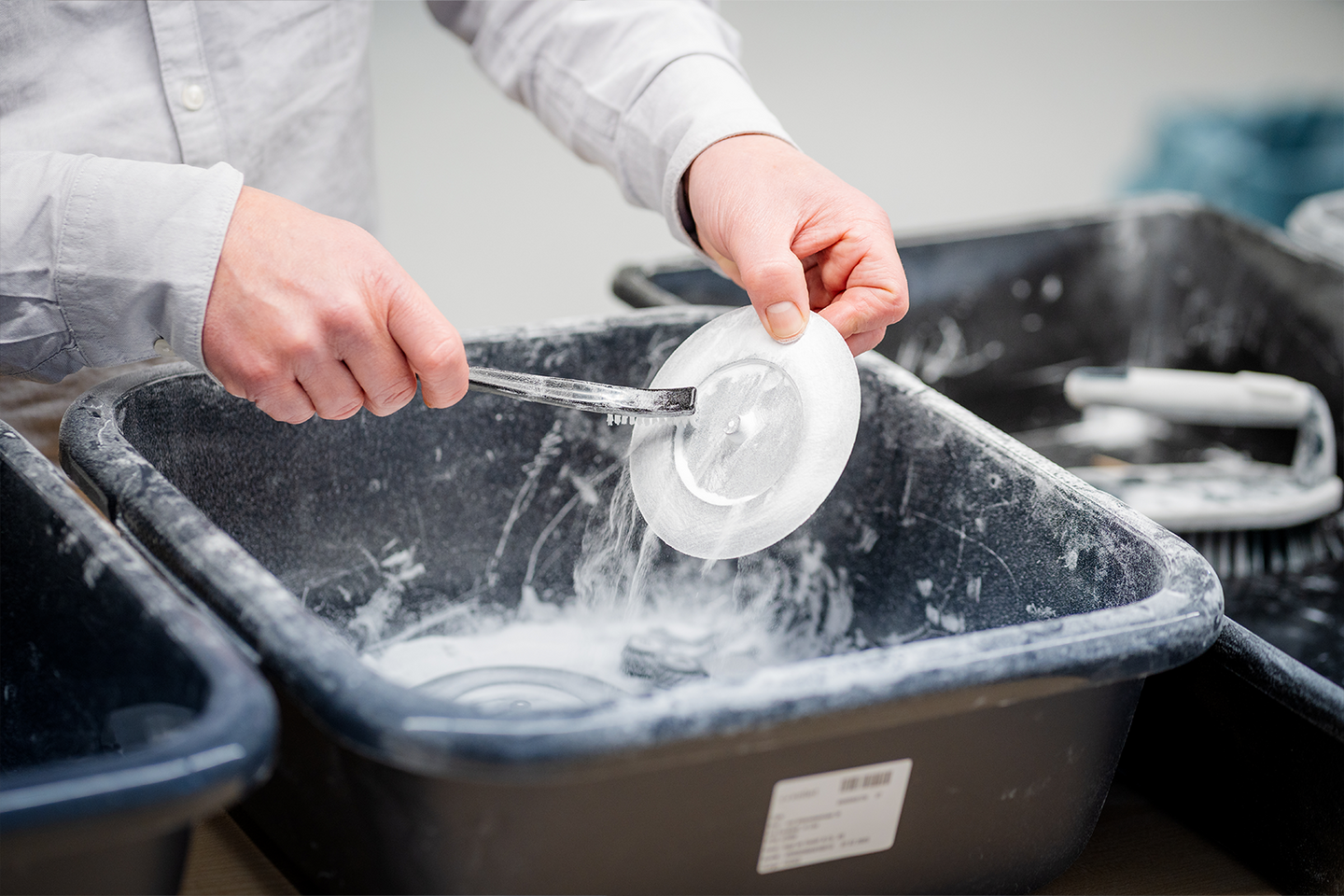
What is meant by "functional surfaces" in the title of the degree programme?
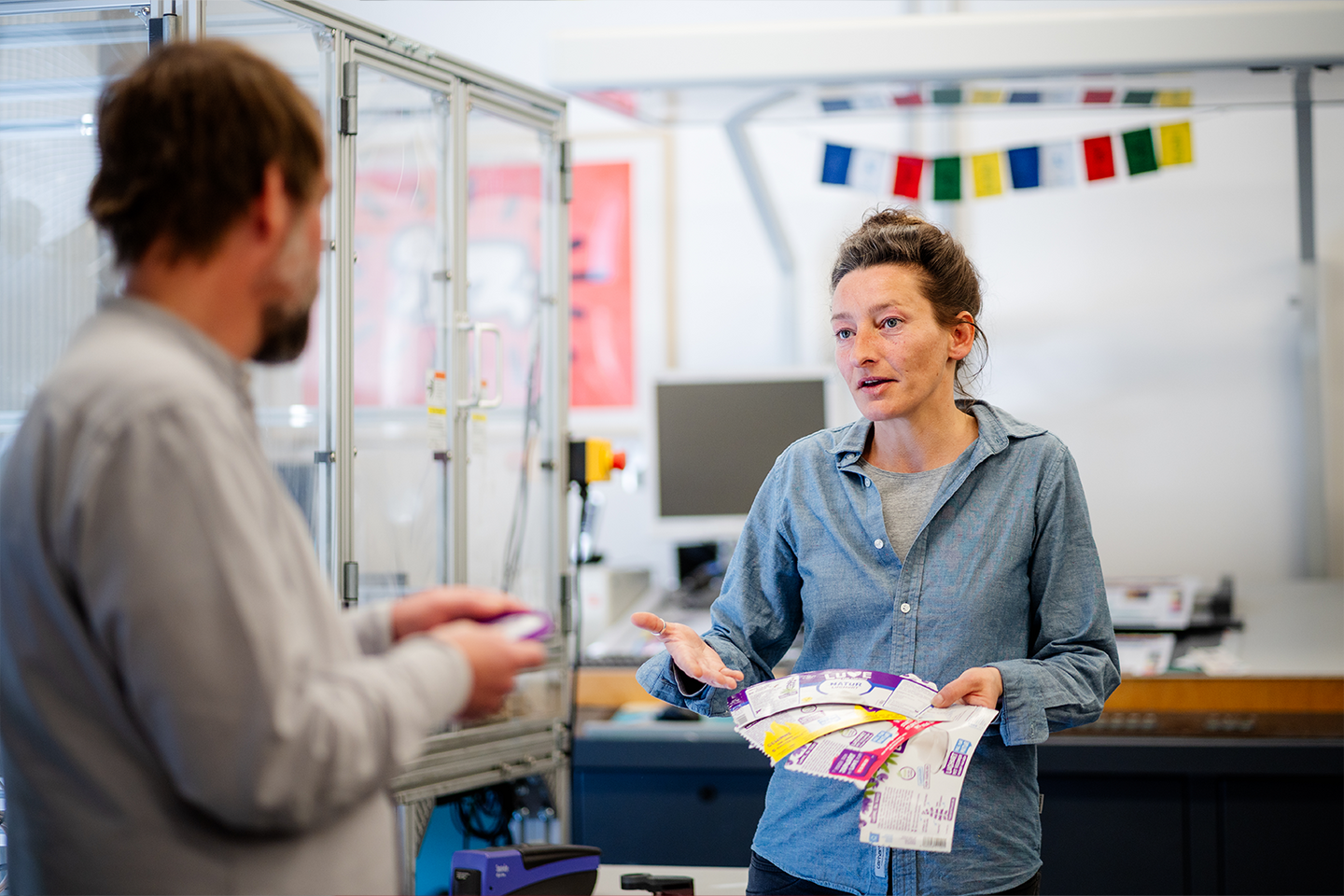
KR: "You could also talk about 2D printing here, i.e. we apply wafer-thin layers to surfaces that change their properties and can fulfil very specific functions. This is most obvious with colour, which visualises important information on packaging, for example. However, printed layers can also fulfil completely different tasks: they enable the flow of electricity on printed circuit boards, they contain the active ingredient in tablets and the displays in smartphones are printed. We are constantly surrounded by 2D printing without always realising it. Without printed layers, our modern lives would not function."
What distinguishes the new degree programme from other similar-sounding courses?
KR: "The combination of subject areas makes our degree programme unique in Germany: the approach of looking at 2D printing and 3D printing processes together and holistically is not found anywhere else. Combined with the fields of design, mechanical engineering and materials science, students develop extensive skills in order to be able to develop, technically dimension and implement processes and products in additive manufacturing methods in an application-specific manner. In other words, we have broadened our perspective and are using this degree programme to map the wide-ranging possibilities of printing technology in industrial production."
The field of application for 3D printing is developing rapidly. How do you ensure that teaching content is up to date in this dynamic environment?
IR: "As a university, we are of course obliged to keep the curriculum up to date. However, the dynamic nature of this subject area is a real challenge, which we solve through cooperation , among other things. We work very closely with industry and orientate ourselves towards specific practical requirements. The basics are the same everywhere, but the areas of application are extremely differentiated; it's always about layers that interact with each other and understanding materials and processes. We build current developments on this.
The practical semester, excursions and projects with companies also keep the programme dynamic and up-to-date. In this way, we ensure that our students are always up to date."
Can you give a few vivid examples of what is possible with these printing technologies?
IR: "One human-oriented field is medicine: personalised tablets can be produced using 3D printing - precisely tailored to individual patients. Implants can also be printed - sometimes even in such a way that drugs are directly integrated in order to avoid rejection reactions.
Another example is functional surfaces, such as self-cleaning materials with a lotus effect. In boatbuilding, for example, surfaces are used that release biocides to prevent algae growth. Micro- and nanostructures play a decisive role here.
And there is also great progress in research, for example in so-called "organ-on-chip" systems, i.e. mini devices with human cells that replicate organ functions outside the body in the laboratory."
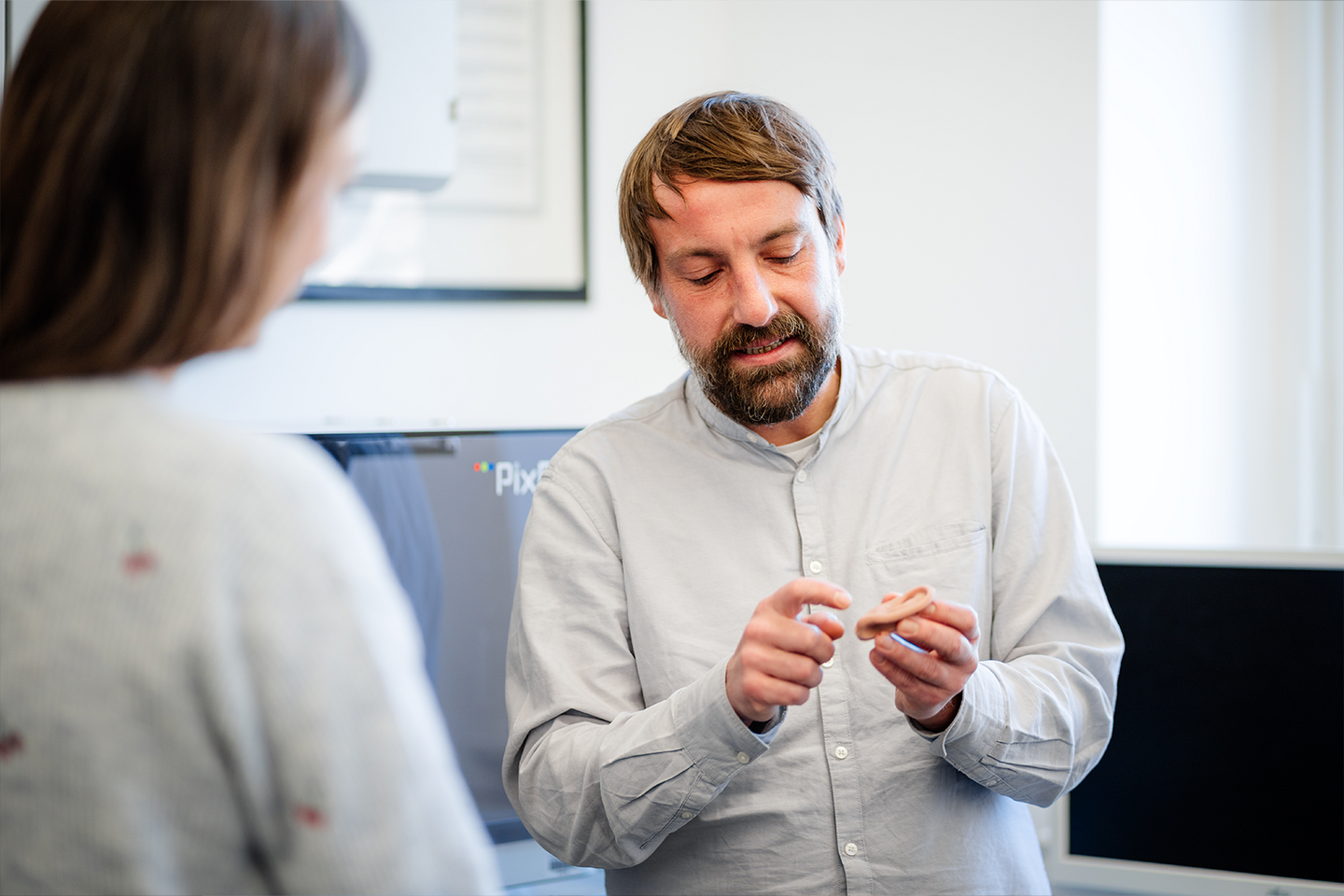
"If you have ambition and remain curious, you can achieve a lot in both industry and science." - Prof Ingo Reinhold
What should prospective students bring to the programme to be successful and satisfied?
KR: "3D Printing & Functional Surfaces" is an engineering degree programme. So you should definitely be interested in scientific and technical subjects. The programme is aimed at young people who want to get to know the diversity of 2D printing and 3D printing processes in order to develop innovative applications with these technologies and make use of the available scope for design. The degree programme is perfect for anyone who likes to solve problems and think creatively in technical terms."
IR: "We are still at the beginning of a development here. If you want to work on the future, this is the right degree programme for you. It's all about curiosity and the willingness to delve into topics.
My credo: you don't have to understand everything straight away. The key is to keep at it, ask the right questions and continue to develop. Lifelong learning is simply part of it here."
Many students are worried(see source 1) about their professional future. What prospects do graduates of your degree programme have?
KR: "Anyone who has mastered 2D printing and 3D printing can start their career immediately after completing their Bachelor's degree. There is a great demand for qualified specialists. And because printing is used in so many areas, the fields of activity are incredibly diverse - from the automotive industry to medical and energy technology to the electronics and packaging industries. You can work in all these sectors as a development, application or process engineer, for example.
In order to find the right career field for you, student research projects in cooperation with our numerous industry partners and the integrated practical semester help you to gain insights and initial experience. This means you can tailor your career start to your personal interests and hobbies."
And what about an academic career?
Is that an option after such a strongly application-orientated degree?
IR: "Absolutely. Our graduates have very good opportunities to go into research and development. Here at HTWK Leipzig, they can go on to study in more depth on suitable Master's programmes and do a cooperative doctorate. A separate research area is being created in the building itself: the Additive MultimaterialManufacturingLab(AM³-Lab). This will soon be officially opened and will serve, among other things, to generate research ideas across faculties.
There are also exciting collaborations with institutions such as Fraunhofer Institutes or Helmholtz Centres, in which our students are actively involved in research. Specialised research areas, such as microfluidics or cryoprinting, also offer interesting prospects that you might not think of at first glance.
One example of ongoing research is the development of 'smart' components: It is possible to apply electrical conductors to a seal so that it provides information about its condition: What is the state of wear? Is fluid leaking? Are all other parameters such as contact pressure, moisture, vibrations, etc. correct? This enables components to make a significant contribution to safety."
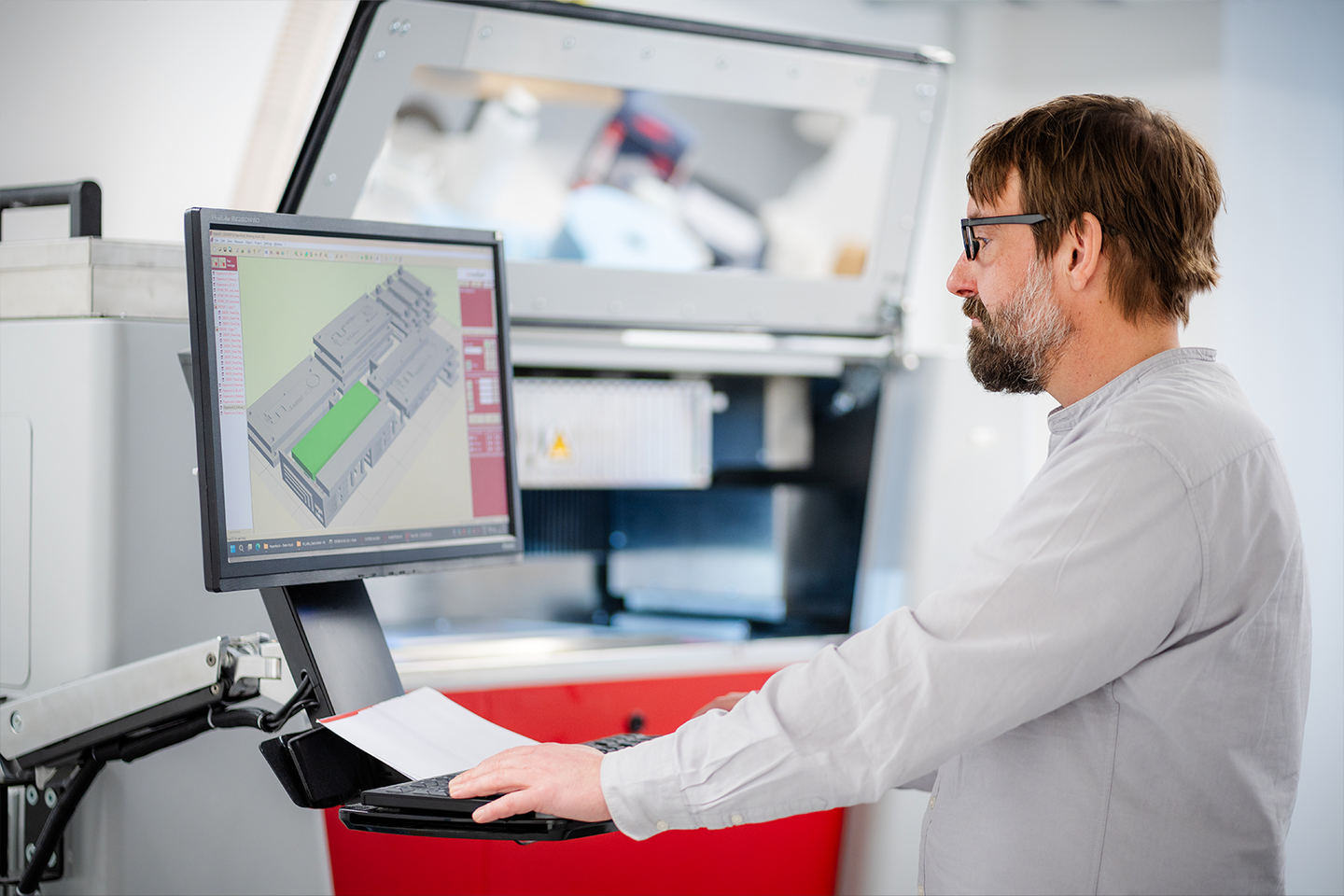
What fascinates you both personally most about this subject area?
IR & KR:"We know something that you often don't see - and that's printed! We are fascinated by how the interplay of scientific phenomena, materials and machine technology can be used to produce precise, functional and high-performance structures and layers. The 'evolution' that printing technology has undergone - from traditional 'black art' to integrated material and product-variable manufacturing technology - is impressive. With 2D printing and 3D printing, we can shape the world intelligently and make an important contribution to the challenges of our time, such as the sustainable use of resources, local production, energy transition and decarbonisation."
Please give us an outlook for the future:
IR: "AI and automation are identified as the main drivers of the future economy and 3D printing sits right in this area of tension. Production must inevitably be person-independent, scalable, cost-efficient and sustainable in terms of our resources. 3D-printed components can be produced locally, on-demand, using less material than ever before and equipped with smart functions."
1. design
(CAD modelling)
- Idea & planning: The component is designed, dimensions and functions are defined.
- CAD software: A digital 3D model is created using computer-aided design (CAD) software.
- Procedure: Usually you start with a 2D sketch, which is then moulded into a 3D body using functions such as extrusion (pulling upwards) or rotation.
Alternatives: In addition to new designs, components can also be created by 3D scanning an existing object. - Export: The model is exported in a printable format.
2. preparation
(Slicing)
- Slicer software: The file is loaded into a special slicer programme.
- Slicing: The slicer splits the 3D model into hundreds or thousands of individual 2D layers.
- Print parameters: Settings are made here: Layer thickness, infill density, printing speed, temperature and support structures for e.g. overhangs.
- G-code: The slicer creates the G-code, a file that tells the 3D printer exactly where to move and how to apply material.
3rd printing process
(additive manufacturing)
- Printer setup: The material (filament, resin, powder, wire) is loaded, the printing plate is cleaned and levelled.
- Layer-by-layer construction: The 3D printer builds the part layer by layer. Depending on the size and complexity, this process takes several minutes to hours.
3D printing refers to a group of additive manufacturing processes that are used to build three-dimensional objects from digital design data by applying material layer by layer. Instead of cutting them out of a block or casting them in a mould, they are built up layer by layer - hence the term "additive manufacturing".
Source reference:
1: News article: Young academics worry about their career start